
The 80% Trap: Why Florida Medicaid Contracts Are Stunting Your Clinic's Growth
![[HERO] The 80% Trap: Why Florida Medicaid Contracts Are Stunting Your Clinic's Growth](https://images.squarespace-cdn.com/content/v1/5a4cefc0914e6b1744910894/09accb82-9018-4134-87ed-ab0564d628b1/Hie-k4lqNUU.webp)
I don't know about you, but when I talk to pediatric therapy clinic owners in Florida, the same frustration keeps coming up: "I can't make the numbers work anymore."
And honestly? I get it.
You went into this profession to help kids reach their potential, to see a nonverbal three-year-old finally say "mama" or watch a child with sensory processing disorder navigate a playground for the first time. You didn't sign up to become a forensic accountant trying to figure out why your Medicaid reimbursements feel like they're getting smaller while your expenses keep climbing.
But here's the thing that's quietly killing clinics across Florida right now: the 80% trap.
If you're accepting contracts from Florida Medicaid managed care plans, there's a good chance you're getting paid only 80% of what the state has determined is the appropriate reimbursement rate for your services. Yep, you read that right. The state sets a rate, and then the managed care organizations (MCOs) turn around and offer you 80% of that amount.
Sound familiar?
What Exactly Is the 80% Trap?
Let me break this down because when I first heard about this on Episode 45 of the SPOT Growth podcast, I had to rewind and listen again.
Florida has state-set Medicaid rates for speech, occupational, and physical therapy services. These rates are meant to reflect what it actually costs to deliver quality care, everything from therapist salaries to rent to administrative overhead to continuing education.
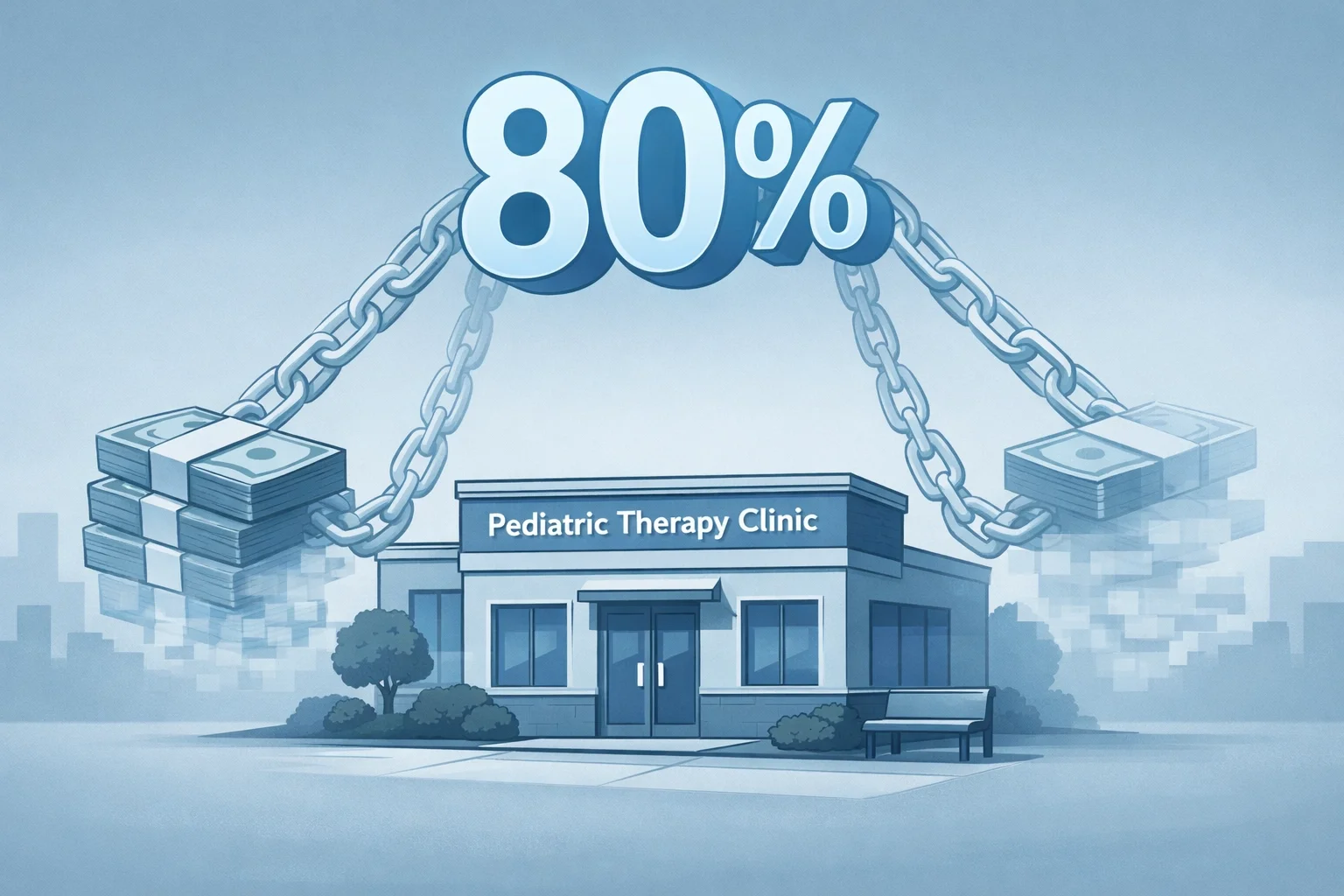
But here's where it gets messy. Most Florida Medicaid beneficiaries are enrolled in managed care plans. These private insurance companies contract with the state to manage Medicaid services. And while the state pays these MCOs based on the full rate, many of them turn around and offer therapy providers contracts at only 80% of that state rate.
Let that sink in for a second.
The MCOs get paid 100%. You get offered 80%. The difference? That's their administrative fees and profit margin, coming straight out of your already-thin margins.
Why This Is Absolutely Crushing Your Clinic
When I talk to clinic owners about this, the first reaction is usually frustration. The second is exhaustion. Because you're not just dealing with lower reimbursement, you're dealing with a ripple effect that touches every part of your business.
You Can't Compete for Talent
Let's be real: good therapists have options.
If you're operating on 80% of the state rate, you're probably paying your SLPs, OTs, and PTs less than the clinic down the street that has better commercial insurance contracts or is in a different market. You might even be paying less than the school districts or hospital systems competing for the same talent pool.
I've heard this story too many times: "I finally found the perfect therapist for our team, experienced, great with kids, ready to start, and then they got a competing offer that paid $10K more per year. I couldn't match it."
That's the 80% trap in action.
Your Schedule Is Constantly Packed (But You're Still Broke)
Here's a cruel irony: you can have a fully booked schedule and still struggle to keep the lights on.
When your reimbursement rate is artificially deflated, you have to see more patients just to break even. But there are only so many hours in a day. So you push your therapists to see back-to-back sessions, cut down on documentation time, and squeeze in "just one more" kiddo before lunch.

And guess what happens? Your therapists burn out. Your quality of care slips. And you're running on a hamster wheel that never stops spinning.
You Can't Invest in Growth
Want to open a second location? Hire a full-time biller? Invest in better scheduling software or sensory equipment?
Good luck.
When you're operating on razor-thin margins, every dollar matters. And when 20% of your expected revenue is being siphoned off before it even hits your account, you don't have the cushion to invest in the things that would actually help your clinic thrive.
I've seen clinic owners stuck in this awful middle ground, not making enough to grow, but too committed to their current patients to shut down. It's exhausting.
The Real Cost: Access to Care
Here's the part that keeps me up at night (and probably you too): kids are the ones who ultimately lose.
When clinics can't afford to stay in business, when therapists leave for better-paying jobs, when providers stop accepting Medicaid contracts altogether, access to care disappears.
And we're not talking about adults who can advocate for themselves or drive to the next county for services. We're talking about kids with speech delays, sensory processing disorders, and developmental disabilities who need consistent, quality therapy during critical windows of development.
The 80% trap doesn't just hurt your bottom line. It creates therapy deserts in communities that are already underserved.
The Alliance for Pediatric Therapies Is Fighting Back
Okay, deep breath. Because it's not all doom and gloom.
There's a grassroots movement happening right now, and it's being led by people like you: clinic owners, therapists, and advocates who are sick of watching this system fail the kids who need it most.
The Alliance for Pediatric Therapies is working to change the conversation in Tallahassee. They're pushing for legislative reforms that would require managed care plans to pay providers at rates closer to (or equal to) the state-set rates.
But here's the thing: legislators need data to act.
They need to see the numbers. They need to understand how many clinics are operating at a loss, how many therapists have left the field, how many families are on waitlists that stretch for months. They need proof that this isn't just a few disgruntled business owners complaining: it's a systemic crisis affecting pediatric therapy access across the state.
What You Can Do Right Now
I know you're busy. I know you're tired. But if we want to change this, we need every clinic owner to step up.
1. Join the Alliance for Pediatric Therapies
Get connected with the advocacy work that's already happening. Share your story. Add your voice to the chorus demanding change.
2. Document Your Data
How many referrals have you had to turn away because you're at capacity? How many therapists have you lost to higher-paying positions? What's your actual profit margin on Medicaid contracts versus commercial insurance? Write it down. We need this data to make a compelling case.
3. Talk to Your Legislators
I know, I know: politics feels like a black box. But your state representatives actually want to hear from small business owners in their districts. Send an email. Make a phone call. Show up to a town hall. Tell them what the 80% trap is doing to your clinic and the families you serve.

4. Reevaluate Your Contracts
Take a hard look at your managed care contracts. Are you actually making money on them, or are you subsidizing Medicaid services with your commercial insurance revenue? Sometimes the answer is to renegotiate. Sometimes it's to stop accepting certain plans altogether (I know that's a tough call).
If you need help analyzing your revenue streams and figuring out where you actually stand financially, Extra Mile Billing has resources that can help you break down the numbers.
The Bottom Line
The 80% trap isn't just a billing issue. It's not just a business problem.
It's a crisis that's quietly gutting pediatric therapy access in Florida, one contract at a time.
But here's what I believe: when clinic owners get organized, share their data, and demand change: things actually happen. I've seen it. Legislators listen when they hear from constituents who can clearly articulate the problem and propose real solutions.
You didn't open your clinic to get rich. You did it because you care about kids who need help. But you can't help anyone if you can't keep your doors open.
So let's fight for fair reimbursement rates. Let's build the data case that can't be ignored. And let's make sure the next generation of Florida kids has access to the therapy services they desperately need.
Feel free to reach out if you want to talk through your specific situation or share your story. We're all in this together.